

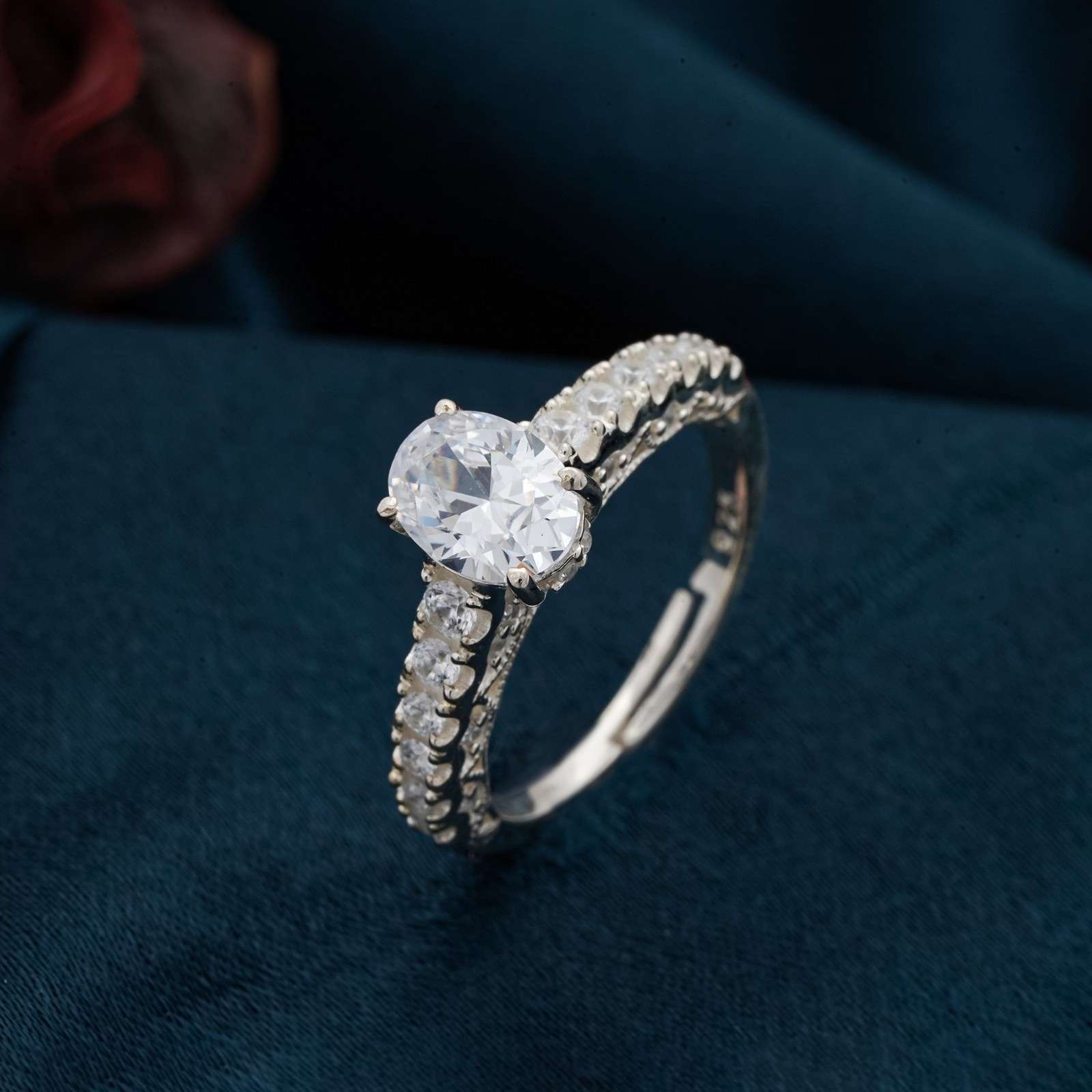
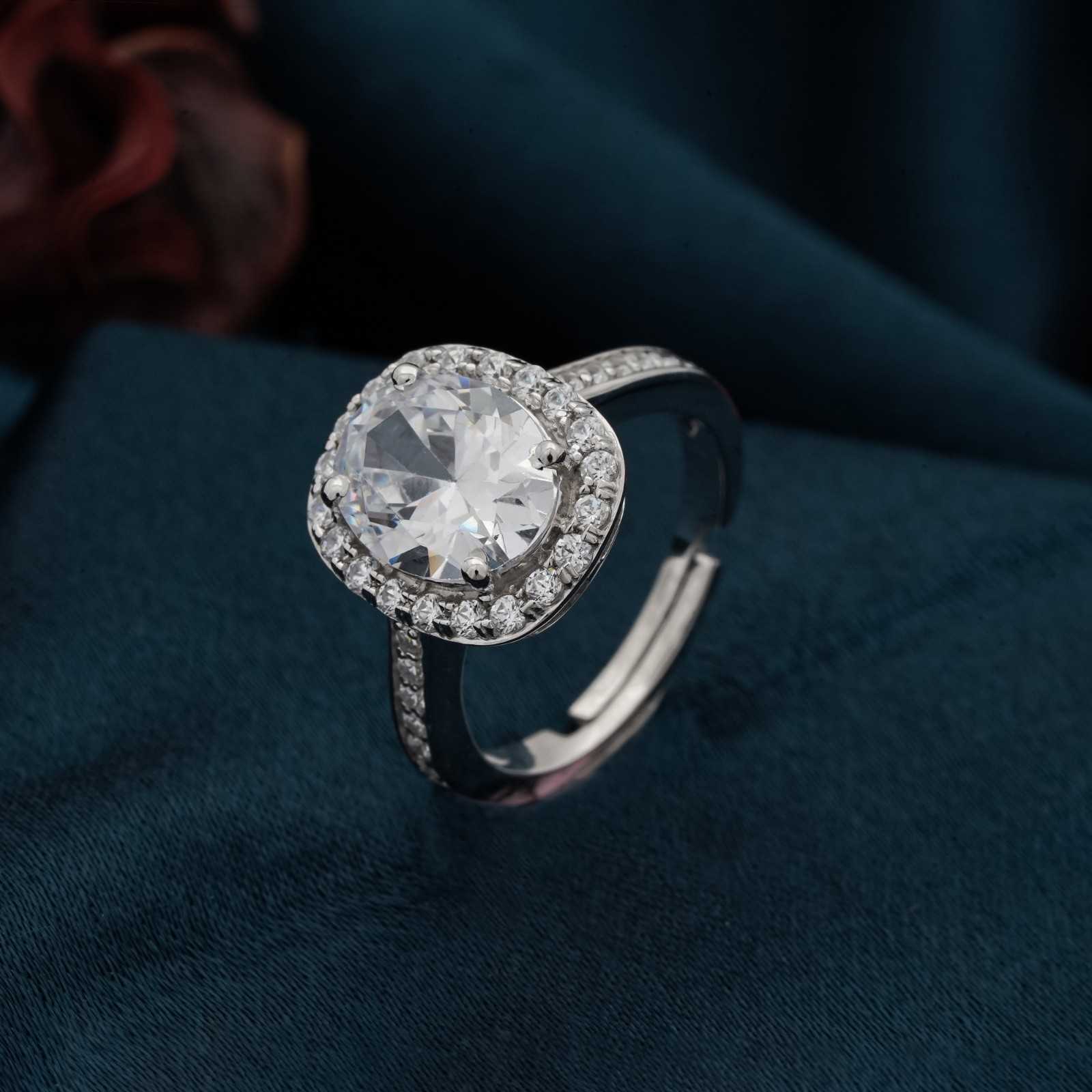
A solitaire ring is a timeless jewellery design featuring a single gemstone, usually a diamond, set on a simple band, symbolising love, elegance, commitment, and prestige across generations.
Featured collection

0.043Ct Moissanite Princess Cut Solitaire Pendant

0.10Ct Moissanite Hollow Star Stud Earrings

0.17Ct Moissanite Celestial Starburst Pendant

0.18Ct Moissanite Modern Orbit Hoop Earrings
Picture this: one sparkling stone resting elegantly on a simple band, drawing attention with every movement of your hand. That's what a solitaire ring is all about. It's simple, traditional, and powerful in its simplicity. Unlike showy items that rely on numerous stones or rich ornamentation, the solitaire ring says, "less is more."
The solitaire has become a world favorite these days, especially in engagement 925 silver rings, because it highlights the stone without distraction.
There is more to it than one solitary stone, however. Solitaire ring history is heavy with symbolism, tradition, and meaning.
The Meaning Behind a Solitaire Ring
Why It's Called "Solitaire"
The term solitaire comes from the French word "solaire" meaning alone or single. The term is used in jewellery to mean a ring with one center stone alone, no side ornaments, no clusters, no trimming. This is a category where the gem takes center stage.
Symbolism of a Solitaire Ring
Symbolism of a solitaire ring goes far beyond mere beauty. One gem by itself has come to be a symbol of:
One true love – just as the one gem, the love is a single and non-replaceable.
Strength and cohesion – the lone stone speaks of completeness, firmness, and focus.
Simplicity and sincerity – it reveals the imperfection, stripping away everything that is non-essential.
Which makes solitaire silver rings designs the most sought-after engagement ring. It speaks a word of lasting love, in plain but profound design.
History of Solitaire Rings
This single focal stone concept is old and was in existence many thousands of years ago. One-gem rings like emeralds or garnets used to be worn by Roman and Egyptian cultures, not only as a protection symbol and virility indicator but also as cultural and religious symbols. To them, the stone was not ornamentation; it had spiritual and cultural significance.
In medieval Europe, royals and nobles wore solitaire rings as a show of affluence. A solitary sapphire or diamond on a gold band was a naked display of status.
Rise of Solitaire in Engagements
Though solitaire rings existed for many centuries, they were made indistinguishable from engagement rings in the late 19th century. This was largely due to discoveries of diamonds in South Africa and the fabled De Beers ad campaign of the 1940s with the motto: "A Diamond is Forever."
This advertisement sold more than just diamonds; it sold the idea of everlasting love given to one sparkling stone. The solitaire diamond engagement ring has since been the height of romance, and tradition continues even today.
Key Features of a Solitaire Ring
Single Stone Setting
The defining feature of a solitaire ring is that it has one big central stone. No side stones, no extra stones, just one solitary gem in the center. This design style emphasizes the quality, luster, and cut of the gem more than anything else.
Because this one thing is under the microscope, customers take longer to choose the perfect stone than they do the band or otherwise.
Different Stone Shapes
When individuals utter "solitaire," they themselves think round brilliant-cut diamond. Solitaire rings, however, are found in numerous cut shapes with their own distinct personalities:
Round – the most classic, offering maximum brilliance.
Princess (square cut) – modern and cutthroat razor-sharp.
Oval – elongates the finger and looks sophisticated.
Emerald – rectangular with step cuts, valued for clarity and refinement.
Pear – a teardrop-shaped gem that's romantic and unique.
Heart – happy and loving.
Any shape changes the mood of the ring, sophisticated to bold to flirty.
Metals Used in Solitaire Rings
The band by itself can be minimalist, but the metal can change the personality of the ring. Some of the most popular ones include:
Yellow gold – traditional, warm, sophisticated.
White gold – new and crisp, makes gemstones look whiter.
Rose gold – romantic, vintage, pink-hued.
Platinum – robust, hypoallergenic, luxurious for ever.
The metal you choose isn't simply about appearance, it also affects how the ring will wear and appear against your skin tone.
Best Stone Choices for Solitaire Rings
Diamond Solitaire
Diamonds are the hands-down winner of solitaire rings. Priced for their hardness (10/10 on the Mohs scale) and brilliance, they symbolize eternity and power, exactly what engagements necessitate.
But even among diamonds, there is discrimination. Some desire perfect white diamonds, but others love the character of a warm-colored or salt-and-pepper diamond.
Gemstone Solitaire
Not all couples desire diamonds. More and more couples are selecting colorful gemstones to be the stones in their solitaire rings so that their rings will be different in an unique manner. Some of the popular choices are:
Sapphire – symbolizes wisdom and loyalty. Blue sapphires are traditional, but so are pink, yellow, and green.
Ruby – red, fiery, and symbolic of passion.
Emerald – green, symbolic of growth and harmony.
Moissanite – lab-created, extremely sparkly, and cheaper than diamonds.
Gemstone solitaires make it more personal, so the ring can be representative of the personality of the wearer rather than traditional.
Types of Solitaire Settings
The gem may be the focus of attention, but how it's mounted changes its look, the level of security, and the general attitude.
Prong Setting
Most common style of solitaire. Delicate metal paws (four or six) hold the gem but allow loads of light in. More glint, that is. It's classy and vintage, but the prongs will need maintenance over time.
Bezel Setting
There, a very thin metal band hugs the stone. Sleek, modern, double-safe. Perfect for busy lives, but sacrifices a little sparkle from the prongs.
Tension Setting
The stone seems to be suspended, held by the tension in the metal band. It's modern and dramatic, but does require expert skill.
Cathedral Setting
This setting uses metal arches to raise the stone higher, such as cathedral style. It makes the ring a flashy, showy spectacle.
All setting styles strike a balance between three factors: security, fire, and appearance. The "right one" is lifestyle and taste driven.
Why Solitaire Rings are Timeless
Cycles may evolve, but the simple does not wane. Strength lies in restraint with a solitaire. A single gem, one simple band, and endless seduction. It's like the cut-to-perfection suit or the little black dress, eternal style.
Solitaire rings are not for engagements only. They are a staple for anniversaries, birthday gifts, or as self-gifts. A solitaire goes with everything, be it jeans or wedding gowns, and is therefore one of the most versatile pieces of jewelry you can have.
Another reason for their longevity? They can readily be switched. A solitaire design makes it easy to swap out for the gem or reduce in size later on without compromising the integrity of the design.
These trends illustrate how while the solitaire is an age-old precept, it does what its name suggests: it solares to the times, encapsulating the personality and taste of each generation.
FAQs
1. Do solitaire rings complement wedding bands?
Yes. Because they're so minimalist in design, they pair easily with plain, pavé, or even eternity bands. They stack beautifully without looking chunky.
2. Can solitaire rings be customized?
Yes. From stone cut to setting, metal to even covert details in the band, solitaires are highly customizable.
3. Why are solitaire rings continuing to trend?
Because they strike eternal simplicity with boundless versatility. Regardless of decade, culture, or fashion dictate, a solitaire ring is always new and on-trend.